
How EU investment in senior care opens new opportunities for B2B expansion into underserved markets
By Philippe Lambinet, Chief Marketing Officer, ADB
For many TV operators across Europe, growth has traditionally meant winning more residential subscribers or expanding established commercial services into hospitality settings such as bars and hotels.
But another opportunity is beginning to emerge: elderly care.
Shifts in demographics and available funding mean now is an ideal time for operators with existing B2B TV strategies to take another look at care homes, assisted living facilities and retirement communities. By combining their content, infrastructure, and commercial experience with a managed platform designed for institutional environments, they can enter the market without starting from scratch.
Why the time is right to explore TV services for senior care
Europe’s population is ageing. According to Eurostat, the proportion of people aged 65+ grew from 16% in 2003 to 21% in 2023. The figure is predicted to hit 30% by 2070.
This long-term trend is driving governments across Europe – and the European Union itself – to invest heavily in modernizing healthcare and elderly care. Increasingly, that investment extends beyond buildings and medical equipment to include digital infrastructure that improves residents’ daily experience and supports care staff.
Programs supported through the European Investment Bank, InvestEU and other EU initiatives are helping fund new facilities and digital transformation projects, with investment distributed through national and regional bodies.
Spain provides one illustration of this trend. Through InvestEU, the European Investment Bank has backed a €90 million project to expand and modernise senior care facilities across seven Spanish regions. Meanwhile, in Poland, EU funding has also been used to upgrade residential care facilities. Together, these investments are helping create modern care environments where digital TV, resident communications, and managed services can become part of everyday care.
The details vary from country to country, but the direction is clear: senior care facilities are gaining access to funding that may not have been available a few years ago.
For operators, that changes the business conversation.
A B2B TV market worth revisiting
Senior care may not be a new idea for many operators. Some may already have explored it and decided the commercial case was not compelling enough. Care providers have traditionally had limited budgets, making the segment less attractive than larger B2B markets such as hotels and hospitals.
The shift in European funding makes it a good time to challenge those long-held assumptions and revisit a segment that may previously have seemed commercially marginal.
Rather than winning residential subscribers one by one, an operator may be able to serve an entire care facility through a single commercial relationship. The model will vary by country and facility, perhaps based on screens, rooms, or broader managed services agreements. The net result is new revenue opportunities from existing content and infrastructure investments.
How operators can take advantage of the elderly care opportunity
Most operators already have the foundations in place:
- Premium TV content and content rights
- Mature TV platforms
- Network infrastructure
- B2B sales and support experience
- Experience delivering managed commercial services
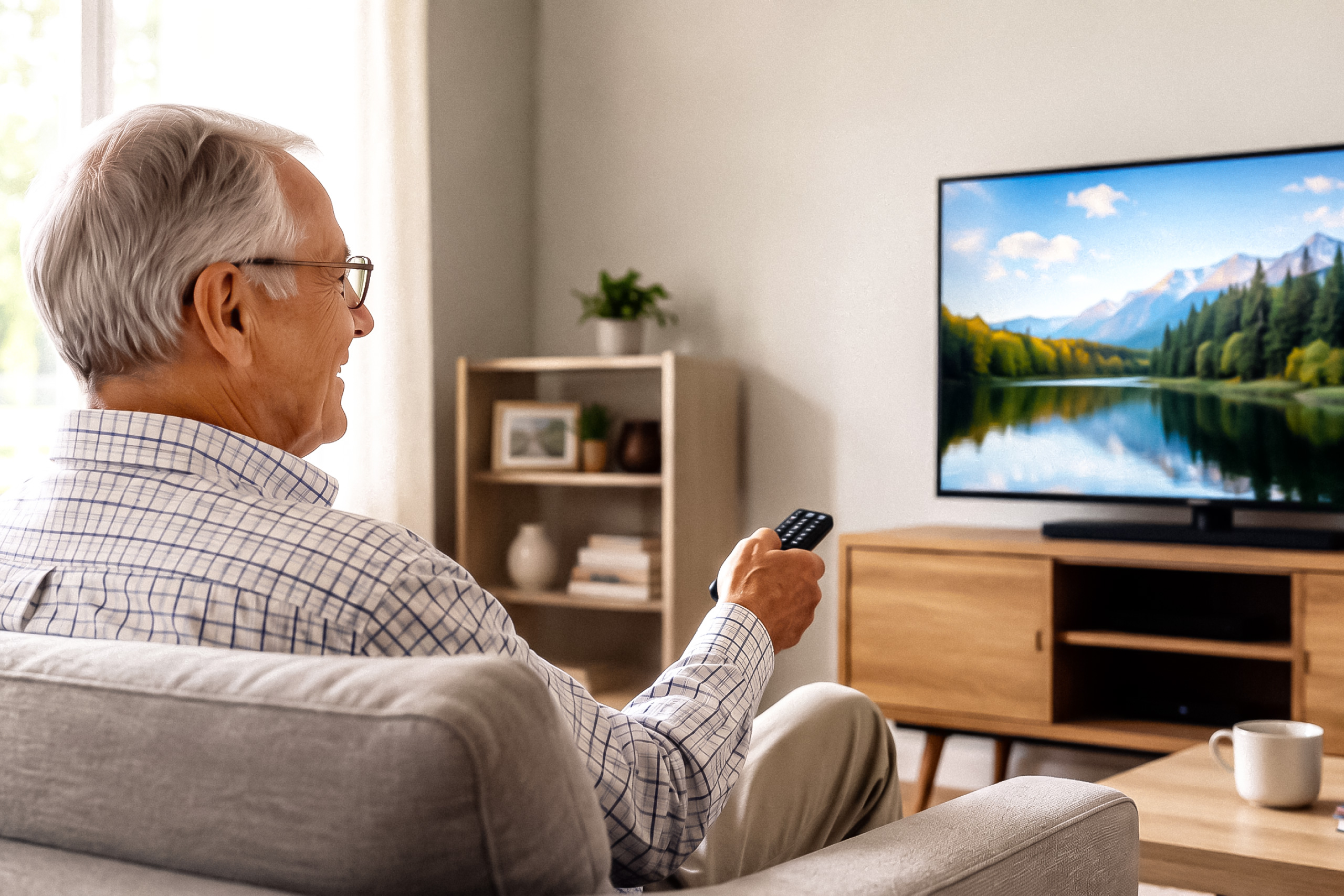
But a care facility does not need a standard residential TV offer replicated across multiple rooms. It needs a platform designed for the way care facilities actually operate, with support for resident entertainment, day-to-day communication, and remote management.
That transforms the television into a familiar communication hub rather than simply another screen.
Platforms such as ADB’s vuTyme NOW achieve this by combining resident-facing services with centralized cloud management and remote operational tools within a single managed service that is simple for residents, practical for staff, and efficient for operators to deploy and support.
Simplicity where it matters most
In a recent blog, my ADB colleague Brent Thompson discussed why simplicity is one of the defining characteristics of successful hospitality TV services. The same principle becomes even more important in senior care, where residents may have limited technical confidence, reduced dexterity, or visual impairments, and staff are focused on providing care, not troubleshooting technology.
That means the service must be intuitive for residents, straightforward for staff and easy for operators to manage and support remotely.
Proven technology for a growing market
This isn’t a future concept. ADB already supports operators delivering managed TV services around the world. While senior care is a timely opportunity in Europe, vuTyme NOW also gives operators the flexibility to expand into hospitality, healthcare, and workforce accommodation such as remote mining camps, military bases and other institutional settings. All these opportunities can be served from a single managed cloud platform, without building dedicated video operations teams or investing heavily in new infrastructure.
Looking ahead
Senior care is unlikely to replace residential television as an operator’s core business.
For operators already investing in commercial video services, it offers another way to generate value from existing content and platforms, while supporting a sector that is evolving rapidly across Europe.
As funding modernizes care facilities, operators that revisit the market today may find themselves well positioned to serve tomorrow’s digital care environments.
To learn more about how ADB’s vuTyme NOW helps operators deliver managed TV services to hospitality, healthcare and senior care environments, contact our team.